

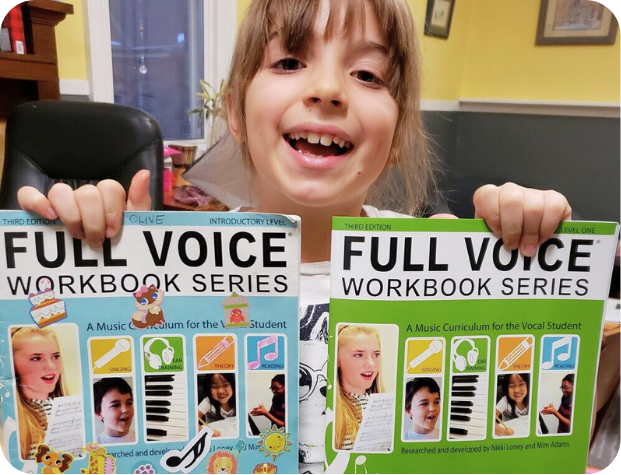
FULL VOICE Workbook Series


Enjoy Stress-Free Lesson Planning
Intensely kid-and-teacher-tested, this four-level workbook series helps young singers develop musicianship skills through singing. Progression is intentional and gradual with new concepts introduced carefully and reviewed often so students build confidence—and you spend less time planning.
Our teacher community loves sharing success stories about higher lesson engagement, stronger pitch and rhythm accuracy, and increased student confidence when they use our resources! Bring this series into your teaching routine and enjoy real results:
✔️ Measurable student progress
✔️ Improved parent satisfaction
✔️ Greater student retention
My students LOVE to use their Full Voice books. I’ve tried many theory books and workbooks, but nothing has worked so well and so painlessly. The pacing is excellent and not overwhelming for newcomers and I love the mixture of exercise types. My students are improving their skills and building a relationship with music theory in which they can feel confident and excited. My absolute favorite! ~ K. Rosen
I started using FULL VOICE with my private voice students a couple of months ago. I have taught beginning voice for many years and have used many different resources. These workbooks explain things extremely well and my students love them! ~ T. Phillips
What’s Inside Each Workbook?
Each 56-page workbook features 20 lessons that unpack the fundamental skills for singers—but don’t worry about finishing it all in one lesson! Students can tackle a single section, a single page, or revisit tricky concepts over multiple weeks. The workbooks are designed to flow with your students’ pace.
An essential part of the learning process, review is thoughtfully built into the series. The first five lessons of each level offer a brief recap of concepts from the previous level, providing quick wins for confident students while creating a sense of familiarity and support for those who may still be developing these skills.
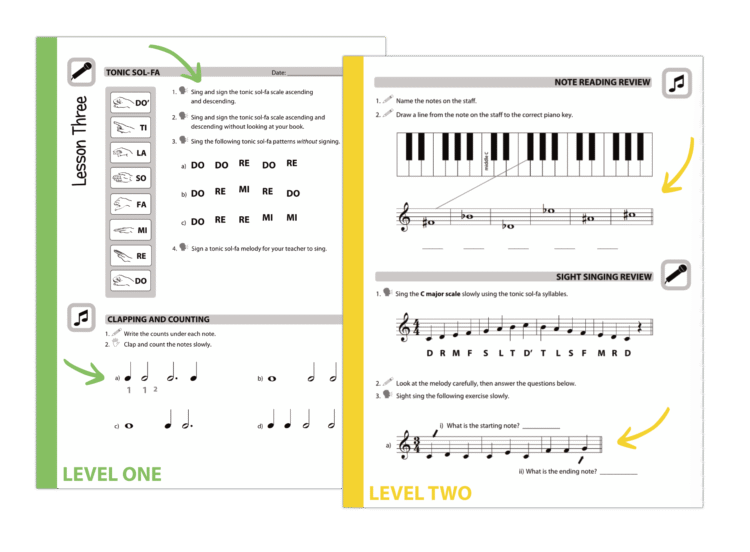
Student Activities
➜ Solfège, rhythms, and note reading are introduced separately in the early levels. (We use Moveable DO)
➜ Skills progress gradually toward sight singing exercises.
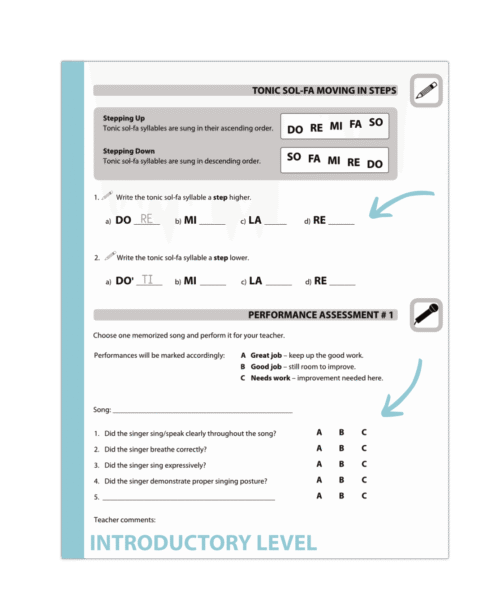
➜ Music theory is woven into all exercises throughout the series. Concepts advance through each level and are reinforced with writing activities.
➜ Performance Assessments are a fun check-in during a singing lesson! They offer helpful reminders and the opportunity to practice focusing on details while performing songs.
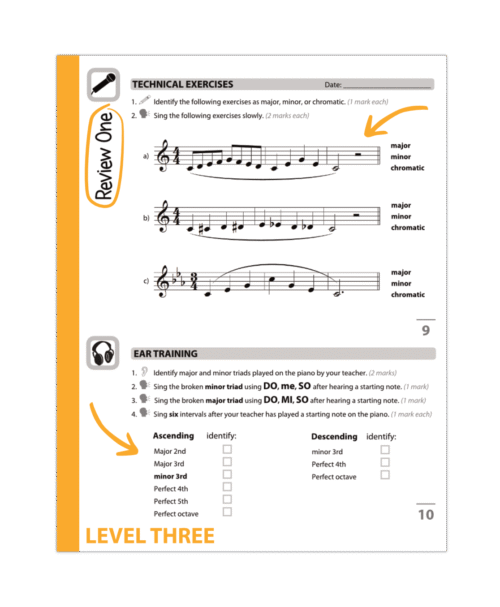
➜ Technical Exercises encourage recognition of common musical patterns while offering opportunities to explore sound production techniques together.
➜ Interval and ear training check-in activities occur frequently throughout the series.
➜ Four graded reviews in each level help students celebrate their progress, spot areas that need extra practice, and stay confident every step of the way. If grading feels stressful for your students, you can skip assigning marks.
Do They Include Repertoire?
The FULL VOICE Workbooks do not include repertoire. They complement the music chosen by teachers and students.
Not for Homework!
The workbook activities are developed to be completed with the teacher during lessons, not as homework. That’s where musical growth happens, especially for younger students. This allows teachers to support deeper understanding and connect concepts to the repertoire so they stick.
Workbook FAQs
Find answers to questions frequently asked by teachers here.

Compare the Four Levels
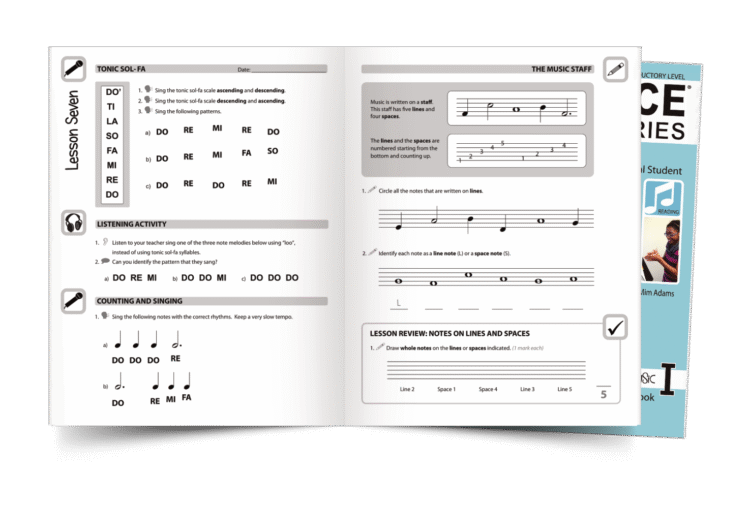
Introductory Level
For young beginners ages 6–8
Perfect for young students new to singing lessons, this level introduces concepts slowly with plenty of repetition and review. Activities are designed to build confidence in private lessons or introductory small group classes.
Concepts introduced:
- Tonic Sol-fa (solfège) & hand signs
- Simple rhythms (quarter, half, dotted half, whole notes & rests)
- Notes on the treble staff
- Sight singing in C Major
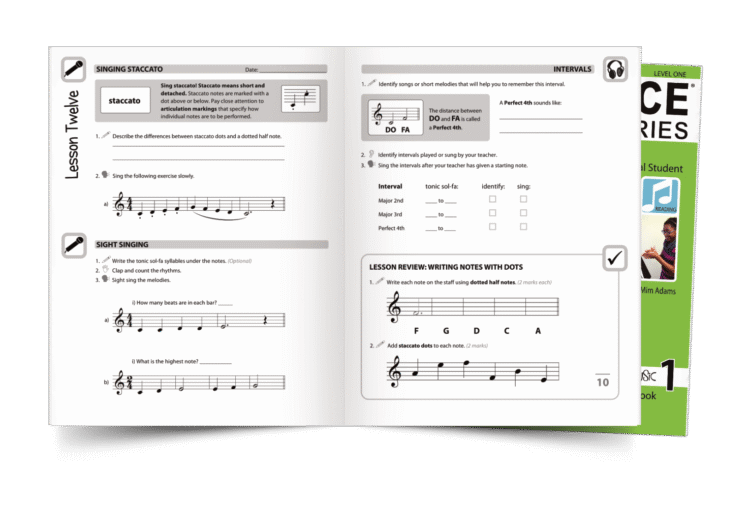
Level One
For beginners ages 8 and up
Level One introduces the foundational skills covered in Introductory Level, progressing at a slightly faster pace and adding more new concepts. It is appropriate for beginners who are older children, teens, and adults. Level One should not be skipped by young students transitioning from Introductory Level, or by any student who is new to sight singing.
Concepts introduced:
- Tonic Sol-fa (solfège) & hand signs
- Simple rhythms (quarter, half, dotted half, whole notes & rests)
- Notes on the treble staff
- Sight singing in C Major
- Singing and identifying intervals
- Eighth notes
- The piano keyboard
- Accidentals
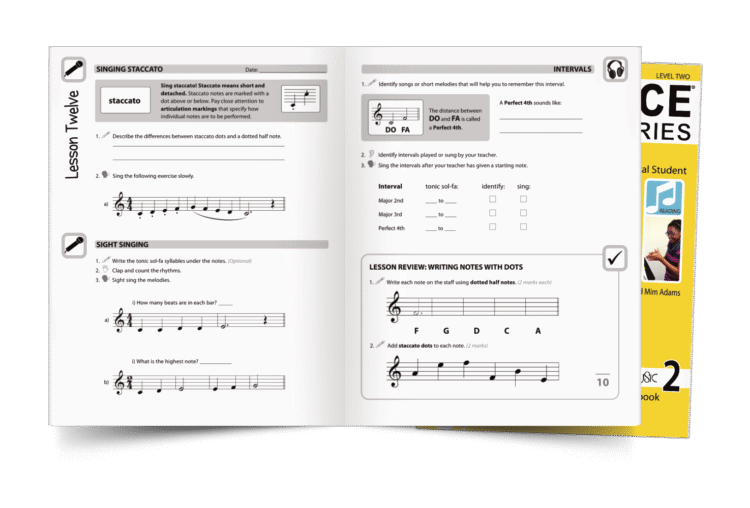
Level Two
For experienced students of all ages
Level Two progresses further into concepts and singing skills, encouraging independent musicianship through more challenging activities. Appropriate for students transitioning from Level One, or experienced students who can confidently sight sing in C major with eighth note rhythms.
Concepts introduced:
- Dotted quarter notes
- Chromatic scales
- Sight singing in F Major and G Major
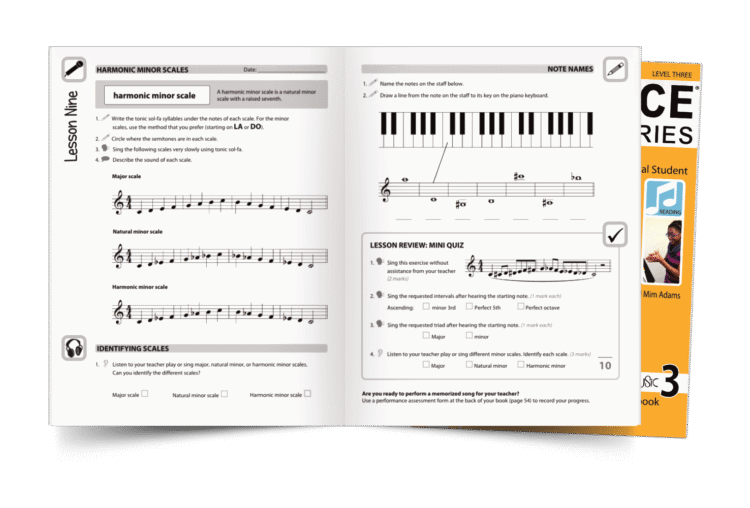
Level Three
For advancing students of all ages who have solid musicianship foundations
Level Three builds confidence, complexity, and independence for more advanced students. Ideal for students transitioning from Level Two, or who are confident performing dotted quarter note rhythms, intervals, and sight singing in C, F, and G Major.
Concepts introduced:
- Sixteenth notes
- Singing minor scales
- Sight singing in D Major
