Let’s talk about one of the most emotionally loaded topics in the voice studio: pitch accuracy.
Pitch accuracy is the ability to hear, match, and adjust musical pitches while singing. Like any coordination skill, it develops gradually through experience and guided practice.
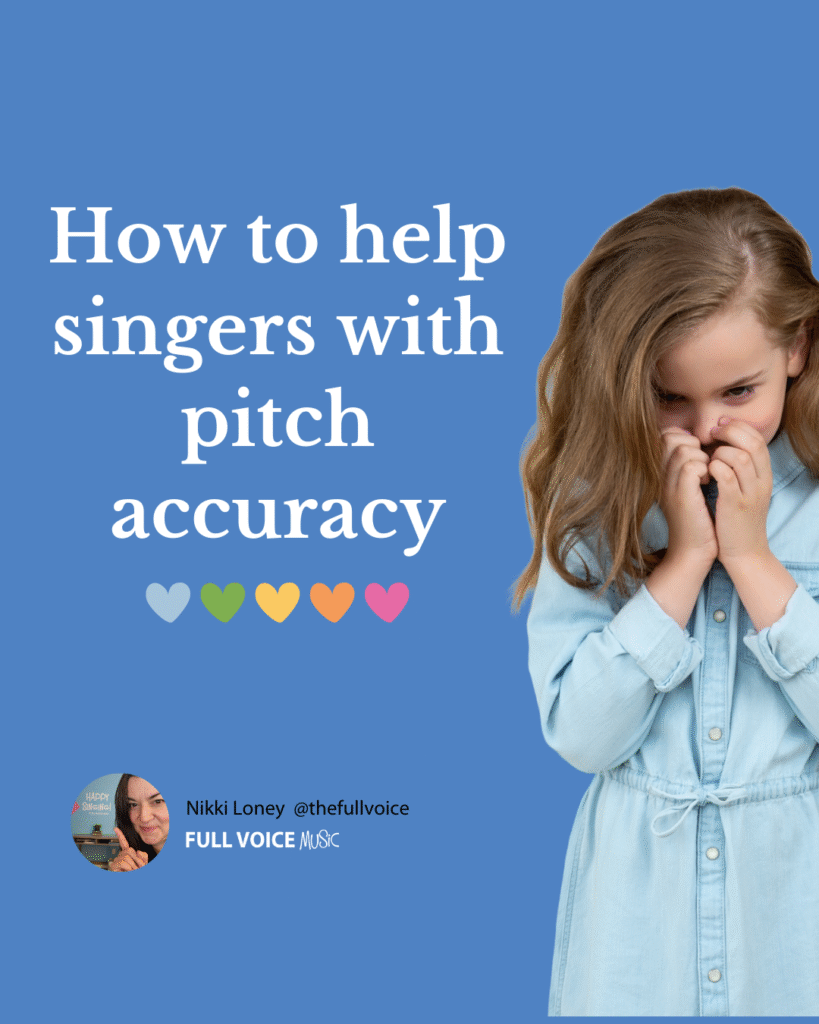
If you’ve ever sat across from a student who just cannot seem to match pitch, you know the spiral. You start questioning your teaching. They start shutting down. Everyone leaves the lesson feeling a little defeated.
We care deeply about helping our singers, but when a student struggles with basic singing skills, many of us feel a little lost about what to do next. And in a results-driven studio culture that expects quick progress, these are the students who are turned away from lessons if we are unsure how to approach them.
This is where we can start.
These students aren’t “struggling with pitch.” They are developing pitch accuracy.
1. Reframing Our Language Changes the Entire Lesson
If we say a student is struggling to match pitch, we feel frustrated. They feel ashamed. If we say a student is developing pitch accuracy, suddenly the work becomes patient, curious, and human.
That reframing changes:
- our expectations
- our pacing
- the emotional safety of the lesson
Language is not just semantics. Language is pedagogy. This reframing with our words helps parents to understand the journey as well. It allows them to take on the role of a supporter rather than a critic. (Which should be their role ALL the time.)
Pitch Accuracy and the COVID Years
Young singers missed out on years of early singing experience during the COVID years. What we are seeing now is not failure. It is a delayed opportunity. And a delayed opportunity deserves gentleness, not pressure.
This is also why we need to drop the term “tone deaf” from our teaching vocabulary. It is ableist language that suggests something is broken when, for most singers, what we are actually seeing is a normal stage of musical development. When people use the phrase “tone deaf,” they are almost always describing inconsistent or developing pitch-matching skills, not a true inability to perceive or enjoy music.
There is a rare neurological condition called amusia that involves differences in pitch processing, but it affects only a very small percentage of the population. Current research estimates that between about 1.5% and 4% of people may have amusia. For the vast majority of students, pitch accuracy is a skill that can grow with time, experience, and supportive teaching. Reframing our language, not just away from “struggle” but away from stigmatizing words like “tone deaf,” helps keep the studio a place of encouragement and curiosity, not judgment.
Prevalence of congenital amusia
https://pmc.ncbi.nlm.nih.gov/articles/PMC5437896/
2. Pitch Accuracy Grows in Playful Spaces
Singers do not find pitch through stress. They find pitch through exploration.
Before we worry about “right notes,” we need to give them permission to play with their voice:
- Rhythmic chants
- Slides and sirens
- Trills and hums
- Vocal expression lines
- Vocal rollercoasters 😀
No wrong notes. No judgment. Just curiosity. These playful vocal activities build confidence first, and confidence is the doorway to accurate singing. When a student feels safe, their ears wake up.
3. Sometimes the Piano Is the Problem
This one surprises a lot of teachers. For singers who are developing pitch accuracy, the piano can actually make matching pitch harder. The overtones blur the fundamental pitch, and the student hears one of the overtones instead of the fundamental
Try this instead:
- Sing the pitch to them, voice-to-voice.
- Singing the pitch voice to voice, exploring different volumes. (singing softer is a cue that often works well)
- Singing short 2 or 3-note melodies, voice to voice
- Use sol-fa hand signs so pitch becomes something they can see and feel, not just hear.
Many voice teachers have noticed that stepping away from the piano will completely change how a beginner singer experiences pitch in a lesson.
4. Repertoire Should Feel Like an Invitation, Not a Test
If the song feels like an exam, their nervous system checks out. If the song feels like play, they lean in. Instead of jazzy Disney songs or musical theatre marathon repertoire, use short and easy-to-learn music:
- Camp songs
- Folk tunes
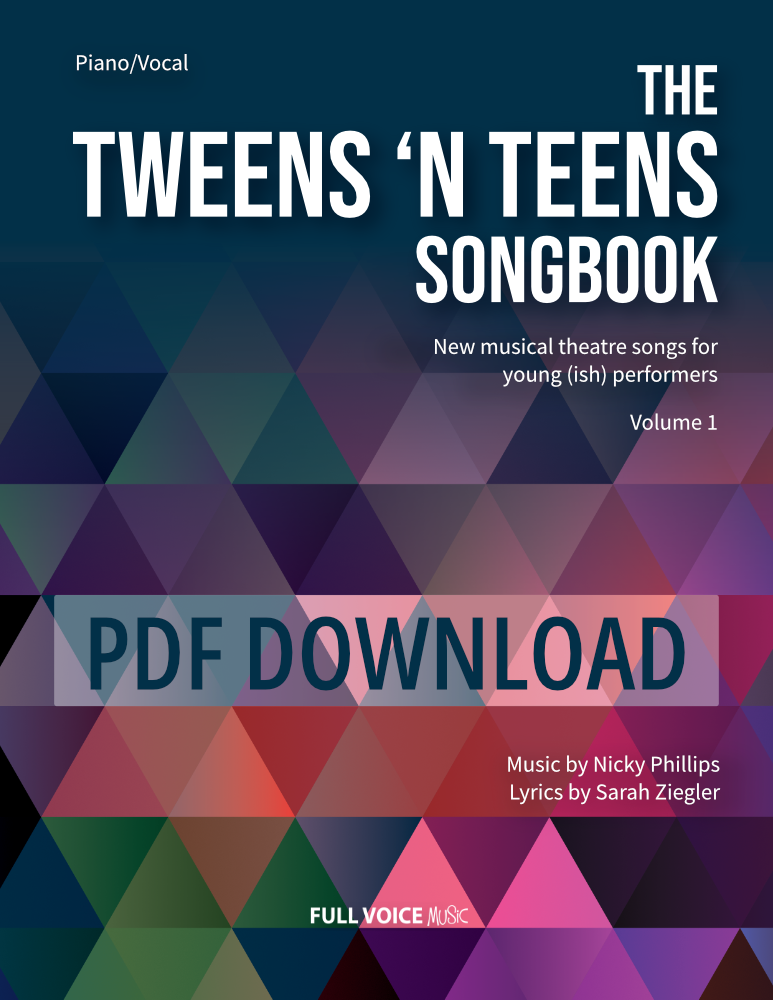
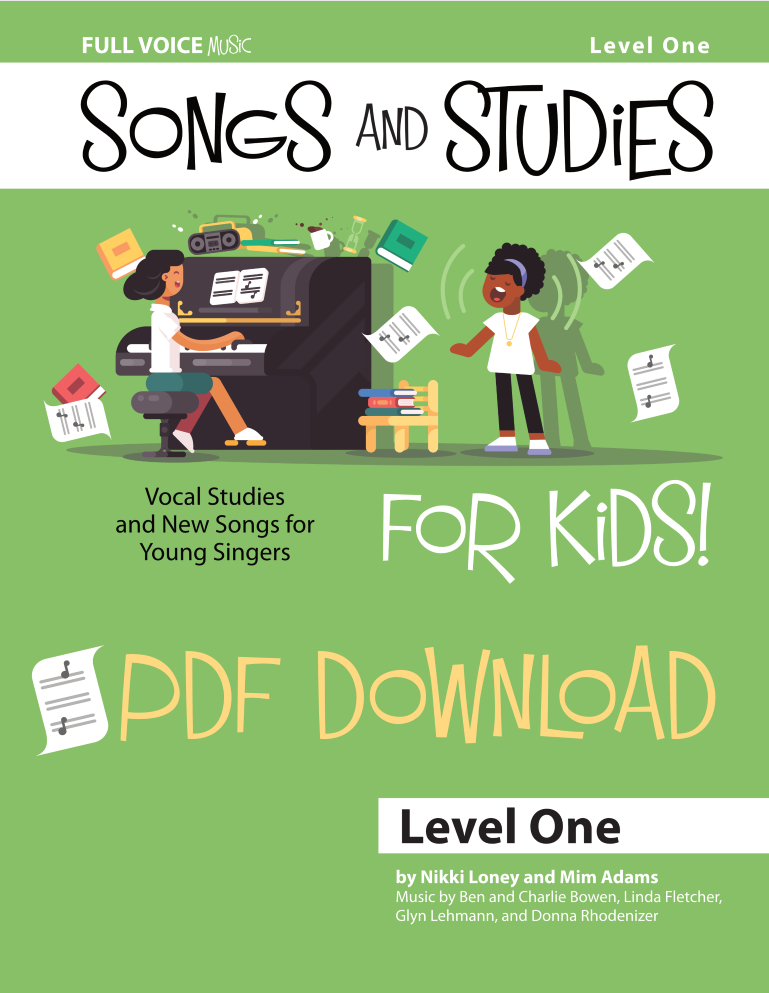
- Songs for young beginners from the FULL VOICE Music Library
When the music is simple and fun, students experience quick wins, and momentum builds naturally. At FULL VOICE Music, we design beginner repertoire with music education specialists who truly understand singers developing pitch accuracy. The themes are playful, the melodies are approachable, and the goal is always confidence first.

Get a FREE short, sweet, and easy-to-learn song
Sign up to receive a complete lesson plan package delivered to your inbox.
The Truth No One Likes to Hear
There are no quick fixes here. Students will need your support at the beginning, so assigning practice won’t give you (or them) any advantage. Hard truth: You won’t see remarkable success in a lesson or two. It doesn’t mean they aren’t “getting their money’s worth.” In fact, it is EXACTLY what they need to move forward and succeed. What is always needed is:
- patience
- kindness
- repetition
- playful opportunities to explore
- smiling your way through the process 💛
Your success as a teacher is not measured by how fast your student progresses. Some singers need a slow, highly repetitive path. What a beautiful opportunity to meet a student where they are and continue the support.
If this resonated with you, please share it with a colleague who is sitting with a frustrated student this week. None of us should have to navigate this work alone.
Happy singing ~ Nikki
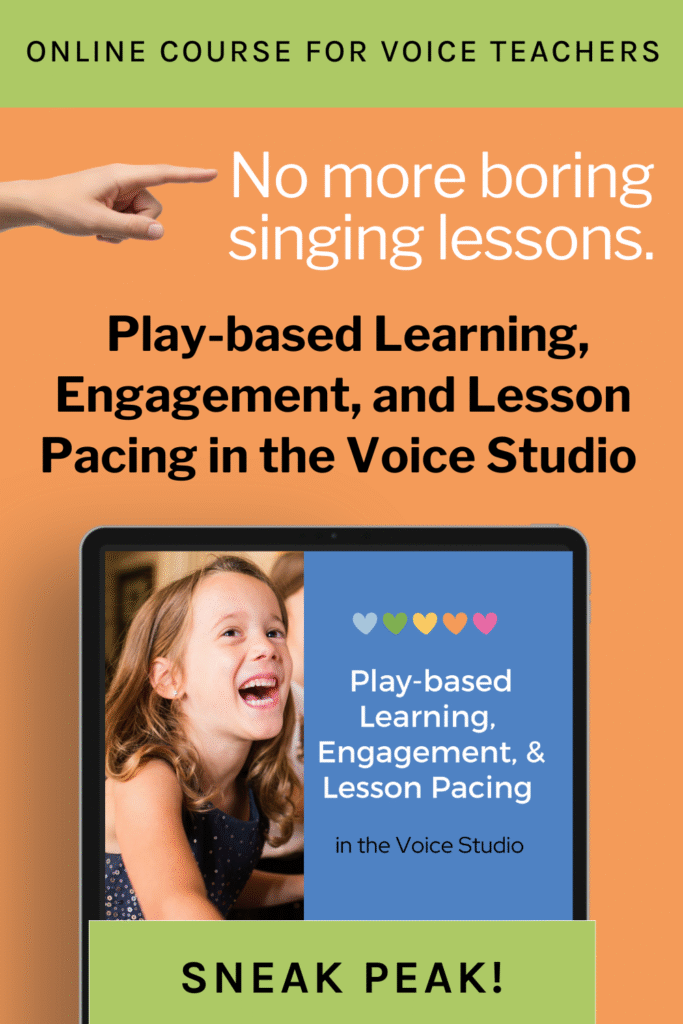
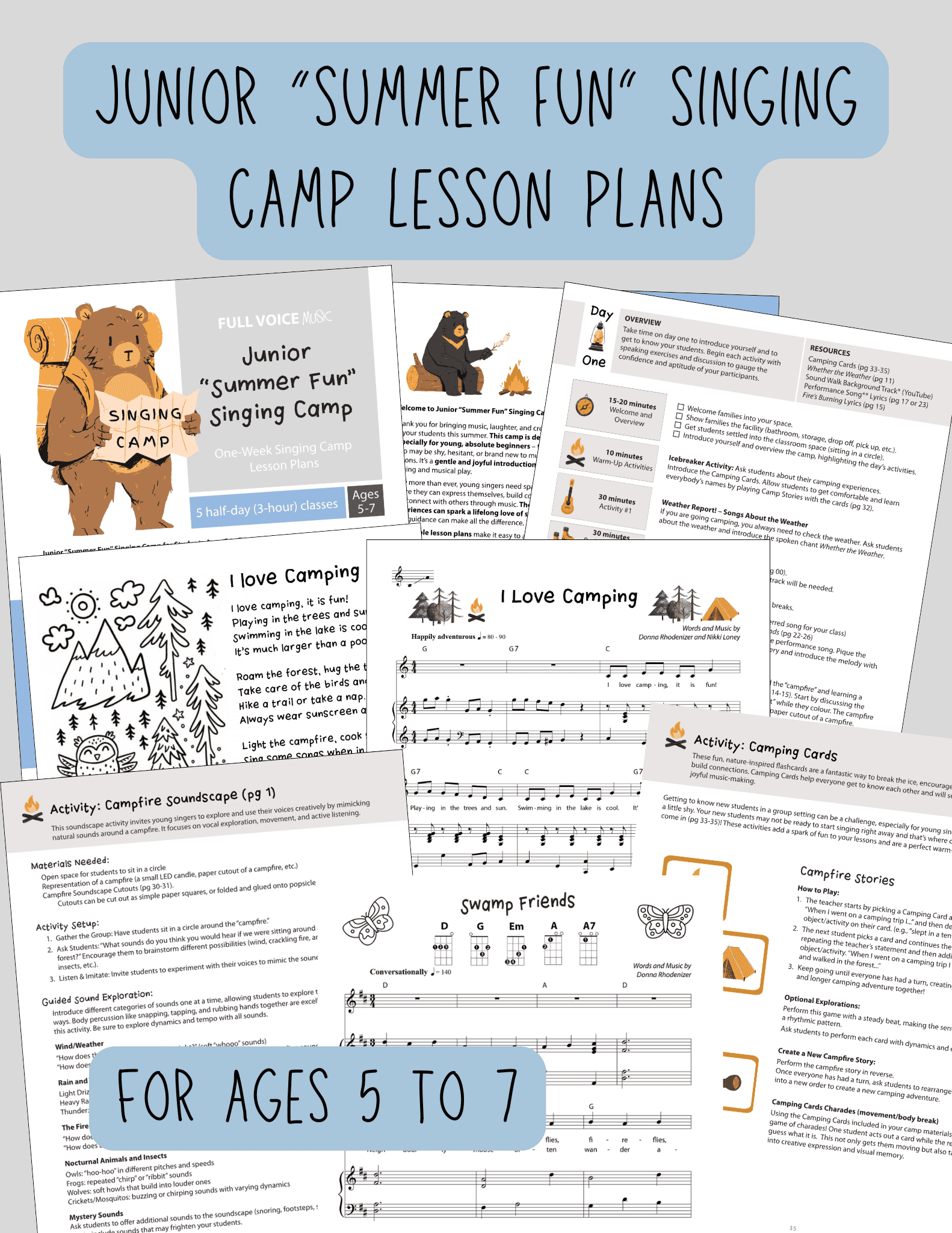
If you’re interested in more playful, research-informed strategies for developing young singers, explore our online courses and live office hours where we demonstrate these activities in action.
If your singing lessons feel awkward and unproductive, please check out our mini-course, Play-based Learning, Engagement, and Lesson Pacing in the Voice Studio Course. You can watch a clip from this highly recommended teacher course here.