When was the last time you attended a class to learn something new? How long did it take before you felt comfortable and confident in participating? (It took me YEARS to get comfortable in a yoga class!) Being a learner is vulnerable.
Welcoming new students (of any age) into your studio and helping them get started with productive voice lessons is an exercise in patience and mindfulness. Even the most confident singers will need time to feel comfortable in your space.
Hesitant or shy singers who are reluctant to sing at even a moderate volume may have different reasons for holding back. While some teachers may dismiss these gentle singers as “not-ready” for lessons, others (hopefully, YOU) recognize that kindness and patience are at the heart of all instruction. The difficult truth for many is that YOU, the teacher, are responsible for creating an environment where students can succeed.
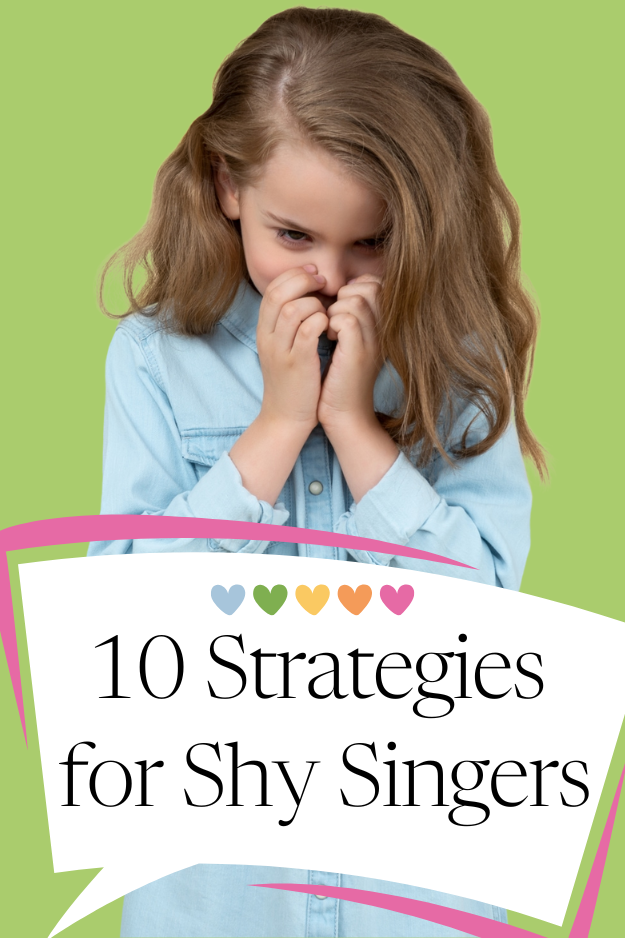
Strategies to Help our Shy Singers
Vocal Exploration Activities
Vocal Exploration activities are unaccompanied singing activities (without the piano!) that allow students to make sounds without correction. For example, they could include vocal roller coasters (writing a line on a whiteboard and having the student sing it), animal sounds, sirens, lip trills, and tongue trills. Again, the no-correction part is essential. Allowing students to discover all the cool things they can do with their voices without the stress of being right or wrong helps build confidence and curiosity.
Prioritize Singing Unaccompanied
Singing and playing the piano with students is less effective than one may think. This quick fix gives shy singers a place to hide, preventing them from discovering their voices. However, voice-to-voice activities, such as copycat melodies with solfege hand signs, can help develop active listening skills and confidence. In addition, unaccompanied singing exercises are great warm-up activities!
Solfège hand signs are a singing teacher’s not-so-secret weapon. Download free solfège cards (🇦🇺 AU cards here)
Start with Speaking Exercises
Students may not be ready to “burst into song” or dive into a vocalise the second they walk in the door. Speaking activities like ready lyrics aloud or rhythmic chants with gestures can be the stepping stone into singing.
Movement
If a student is moving, they are learning. Therefore, activities such as stretching while singing, using solfege hand signs while learning a melody, gesturing, or simple body percussion will significantly impact the volume and confidence of your new singers.
Inspire curiosity
Corrective language is never neutral. Instead of telling a student what to do, use language that invites curiosity and empowers the student. My favourite instruction is:
“I wonder what would happen if… (insert instructional cue here.).”
This instruction gently encourages students to pay attention and develop interoception skills. (Something that varies significantly from student to student, regardless of age.)
Improved instructional cues
Instructions that work for one student may not make sense to another. (Just ask my yoga teacher!) Even simple instructions can be confusing to students of all ages. “Sing louder” is vague, especially for a beginner. “Sing as soft as a Kitten” or as “loud as a lion” may entice them more. Personal connections will always see results. If you know students well, what can they relate to? Try something like this:
“Can you sing as loud as your baby sister cries?”
“If your best friend was across the room, how would you call out to them?”
Visual and Kinaesthetic Activities
How can you make your activities more visual? How about flashcards? We recommend Ann Baltz’s Attitude, Gesture, and Movement cards!

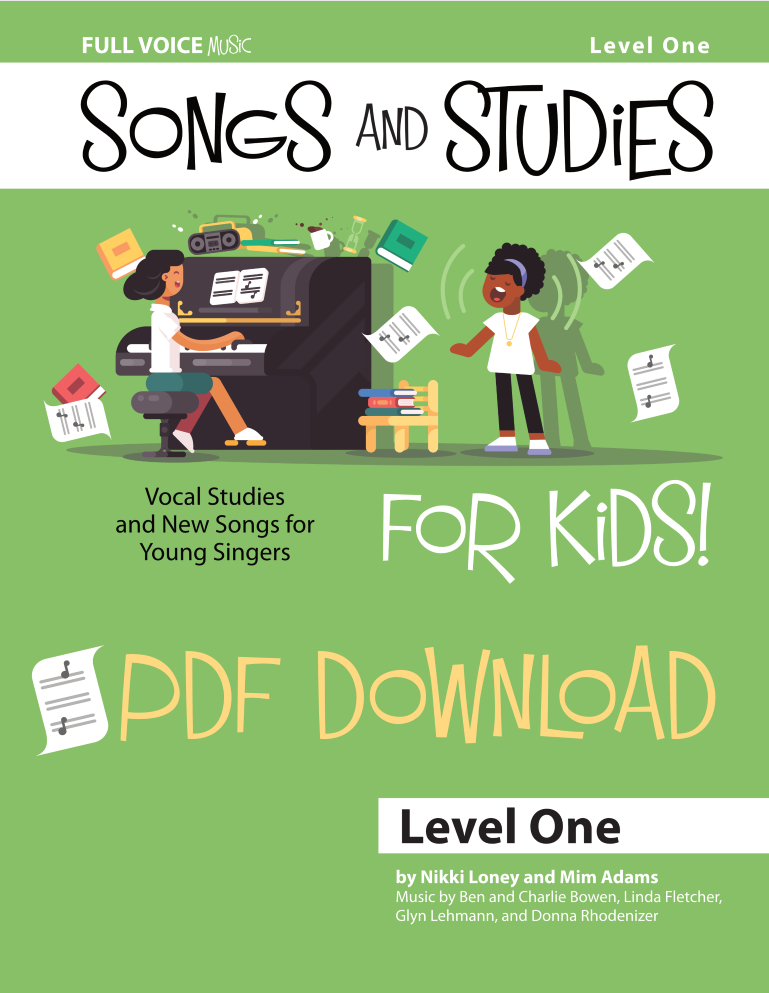
Making exercises visual can help singers with engagement and participation. Vocal Warm-Ups and Technical Exercises for Kids! was developed to make singing study more visual and engaging. This book is available on our website in print format or PDF download, and on Amazon worldwide. (🇦🇺 AU print here and download here)
Allow them the music they LOVE to sing.
Sometimes you DO have to talk about Bruno! It may not be your favourite. It may not be age or ability-appropriate. However, any song that students are eager to sing will help you (and them) discover their dynamic range. This is often the ice-breaker that helps get them singing without hesitation.
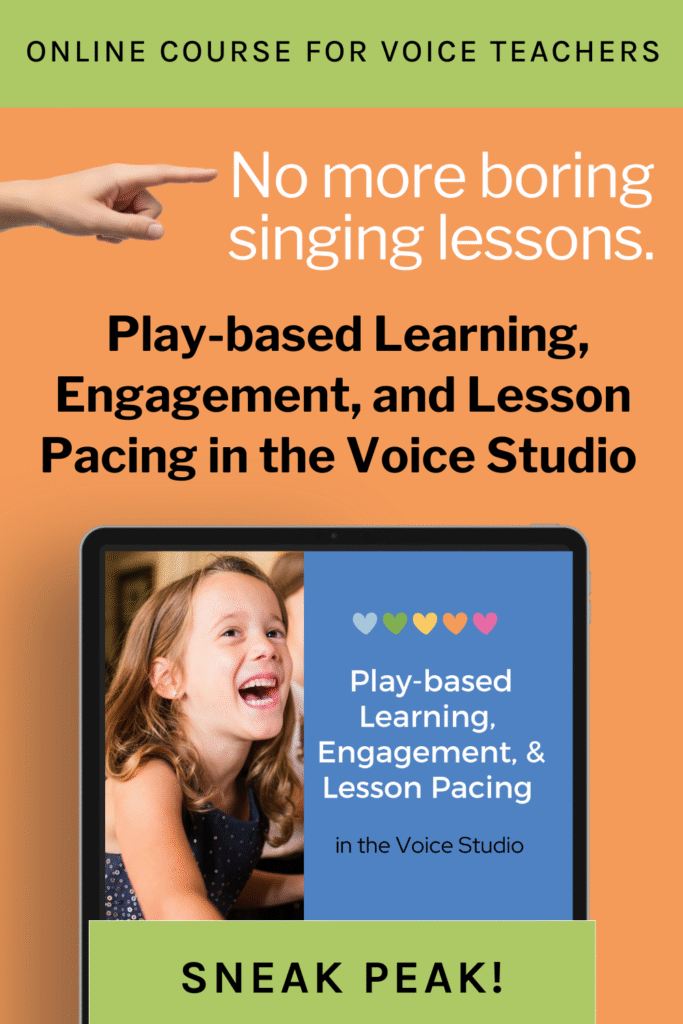
Play-based learning for the win!
Super-serious voice lessons feel productive, but neuroscience offers endless reasons for a playful approach.
If you need inspiration and ideas for WOWing your students with highly engaging, well-structured lessons, check out our
45-minute mini-course for voice teachers.
Let them be the teacher
Role reversal, in which the student leads the teacher during the musical activity, is very effective. This switch allows the student to enjoy a leadership role and explore the activity in a different way. It also allows them to relax as they are not in the “hot seat” for a while.
Never-ending encouragement and praise
Big smiles from you, fun stickers, thumbs up, high fives (my favorite), and well-chosen words of encouragement go a long way to building singers’ confidence. Voice teaching professionals know those small-step improvements are big deals. Shy singers (and their parents) need to hear about their progress every lesson. Moment-marking language is when we are more detailed in our compliments.
“That was outstanding – I love that you are exploring a new volume.”
“I really noticed that crescendo on that line. It made the performance exciting!”
One final thought
Sometimes our students don’t want to sing out loudly or sing at all. (Can’t we all relate to that?) We nurture safer learning spaces when we give our students choices. And choosing to sing quietly or doing non-singing music-related activities at that moment is 100% okay. And if you need the reminder, your ability as a teacher is not determined by how quickly your students progress.
As always, wishing you inspired teaching and Happy Singing! (no matter how loud or soft it may be!)