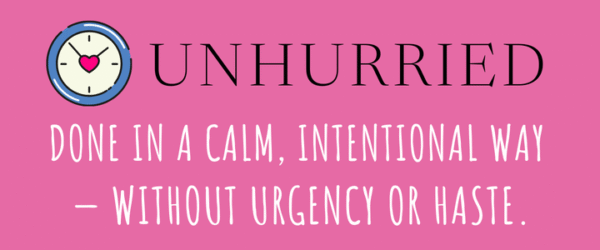
Unhurried means calm, intentional, and free from haste.
And yet, somewhere along the way, voice lessons became a race.
We speed through warm-ups.
We rush through repertoire.
We cram in theory, ear training, sight-singing, scales, and exam requirements.
And then we assign more practice to “make up” for what we couldn’t fit in the lesson.
The Curse of Hustle Culture
This rush didn’t start in our studios. We live in a culture that rewards speed, busyness, and constant productivity. Quick wins are celebrated; slowing down can feel uncomfortable or even shameful.

Not-so-fun-fact: Over the past two decades, children have experienced less play and more pressure at earlier ages, a shift linked to rising anxiety and declining curiosity. It makes sense that this mindset followed us into the voice studio.
To the Teachers with Big Hearts
We rush because we care. We want to be prepared, helpful, and worthy of our fees. We carry expectations from parents, schools, and ourselves. When we raise our rates, we can feel pressure to “do more” in the same amount of time.
So we cram. We overfunction. We fix, fix, fix — until our lessons feel frantic rather than musical.
To the High-Demand Teachers
For those with years of experience in the trenches. If your lessons run like a tightly scheduled operation, constantly marching toward the next objective, it might be time to pause.
That structure can keep things moving, but it can also shut down curiosity, breath, and genuine learning. Singing does not flourish under command-and-control. It grows in space, trust, and listening.
You are allowed to loosen the schedule, soften the tempo, and let the room breathe. Your students — and your nervous system — will thank you for it.
Here’s the truth we don’t say often enough: Fast lessons do not equal deep learning.

What Learning Actually Needs
Across learning science, child development, and voice pedagogy, the message is the same:
Learning needs space.
It needs repetition.
It needs silence.
It needs time for the nervous system to settle.
It needs the learner to notice what they feel in their body.
When students are rushed, their brains stay in survival mode. When lessons slow down, breath deepens, posture softens, awareness grows, and singing feels safer. The pressure to “get it right” fades, and students begin to truly participate in their learning.
IF you feel it is time to address the self- and society-inflicted stress and pressure in your pedagogy, here are some strategies.
Start with Your Studio Calendar
Unhurried teaching isn’t only about what happens inside a lesson — it lives in your yearly calendar.
If you plan recitals, exams, festivals, or workshops, ask yourself: Have I allowed enough time for students to really live with their music, not just “get it done”?
In my own studio, I moved my winter recital later so December could feel lighter and January more productive. I also stopped entering students in exams until they had lived with their repertoire for at least six months. Most students needed the time to dive deeper into the repertoire. Others realized exams weren’t right for them, and that valuable information helped us adjust our goals.
Unhurried teaching is not about fewer opportunities. It’s about better timing.
Build in Real Breaks
Do you have true breaks in your teaching year? Not slower “make-up weeks,” (I SEE YOU) but real pauses where your studio is closed, and everyone can rest. Teachers need this. Your students need this. Their families need this.
Rushed Lessons and Practice Struggles
Many “practice problems” begin in the lesson itself:
We try to cover too much, students are overwhelmed and nothing “sticks”.
We assign practice, expecting learning to continue at home.
Then we are disappointed when we can’t move into new material the following week.
THEN everyone feels stressed out that we haven’t progressed.
Do you see the problem with this pacing? Slowing down in lessons ends the cycle.
Consider Longer Lessons
The 30-minute lesson was standard back when I was a kid, but I also had a thriving choral and band music program at school that enriched my musical experiences. If you are playing multiple roles as a voice teacher, acting coach, music theory instructor, repertoire advisor, and sight-singing coach, consider offering longer lessons.
Moving to 45-minute lessons (for kids) and hour-long lessons (for career-track singers) changed the energy in my studio and allowed me to teach more mindfully. (For more information about this, see the Death to the 30-minute lesson blog.) There are many solid reasons to move to longer lessons and to be intentional in packaging your services. And if, for whatever reason, you INSIST on a shorter lesson, you must understand that your students need more in-lesson review to be successful, so plan your yearly calendar with intention.
From Hustle to Unhurried, Student-Led Lessons
Lesson pacing isn’t a schedule. Effective lesson pacing has to be fluid, adapting to the needs of each student. Exciting and productive lessons can look different for every learner. If you are rigid in the structure of your lessons, ask yourself why. Are you on autopilot? Do you notice when a student needs a longer warm-up, or when one needs to skip the vocal exercises and move into repertoire?
The best way to embrace a more unhurried pace is to let students guide you. Student-led teaching can feel like a big adjustment, especially if you’re used to micro-managing every moment of a lesson, but it sits at the very heart of meaningful learning. There will be some back-and-forth as you learn to loosen your grip, but my friend, the benefits are incredible. When students help shape the lesson, curiosity grows, pressure fades, singing starts to feel like something they own — and teacher burnout becomes a thing of the past.
Simple Student-Led Strategies to Try This Week
- Let them choose the warm-up.
Offer two options and ask, “Which feels right today?” - Hand over the tempo.
Let them choose the speed of an exercise and notice what helps their breathing. - Let them choose the vowel.
Celebrate what they discover rather than correcting immediately. - Repeat — silence — repeat.
Stay with one idea longer and leave space for quiet reflection. - Replace correction with curiosity.
Try: “I wonder what would happen if…”
Want to Slow Down Without Losing Momentum?
Play-based Learning, Engagement & Lesson Pacing Course
This 45-minute on-demand presentation shares practical strategies to facilitate more dynamic, joyful, and productive lessons. Witness your students’ enthusiasm and growth through engagement and a positive atmosphere, ensuring a rewarding experience for everyone. Learn about this online course
A Gentle Experiment
In your next lesson, let your student sing a phrase two or three times before you speak.
Notice what changes when learning is allowed to live in sound — and in silence.
You may find those quiet moments teach more than any explanation ever could.
Slowing Down Isn’t Falling Behind
It’s how learning actually lands.
Your students don’t need faster lessons. They need unhurried ones — lessons that feel like a place to arrive.
And honestly?
So do we.
A special thank you to @unhurriedclassroom and @give.spark for inspiration.
Interested in more student-centered and inclusive inspiration? Subscribe to our Teacher Newsletter for ideas and resources to help you build safer singing spaces.

📚 Research & Reports on Play + Child Development
1. American Academy of Pediatrics – The Power of Play
This clinical report explains how play supports social-emotional, cognitive, language, and self-regulation skills — the building blocks of executive function and stress regulation — and why replacing play with didactic, test-focused activities can be harmful.
The Power of Play: A Pediatric Role in Enhancing Development in Young Children (AAP report)
2. Peter Gray on Play and Mental Health
Psychologist Peter Gray (Boston College) has documented how free, self-directed play is essential to healthy learning and development, and how its decline over decades correlates with increases in anxiety and depression among children and adolescents.
The Decline of Play and the Rise of Psychopathology in Children and Adolescents (Gray review)
3. Why Play Matters for Learning & Mental Well-Being
Free play — self-chosen, self-directed, and unstructured — supports emotional health, resilience, social skills, and cognitive growth. The decline in free play over recent decades is linked with negative effects on child development and well-being.
Free Play: Its Importance in Childhood Development (Wikipedia overview)
4. Commentary on Play’s Role in Child Mental Health
Recent reports and essays tie the reduction in unstructured play with higher rates of anxiety, depression, and loss of creativity in young people, underscoring what happens when educational culture prioritizes speed and outcomes over exploration and joy.
Children Today Are Suffering a Severe Deficit of Play (Aeon essay)
5. Peter Gray & Play in Modern Education
Conversation and research summaries highlight how modern schooling’s focus on adult-directed activities — as opposed to self-initiated play — can undermine natural learning processes.
“Let Children Play!”: Connecting Play, Curiosity, and Learning (PMC article)